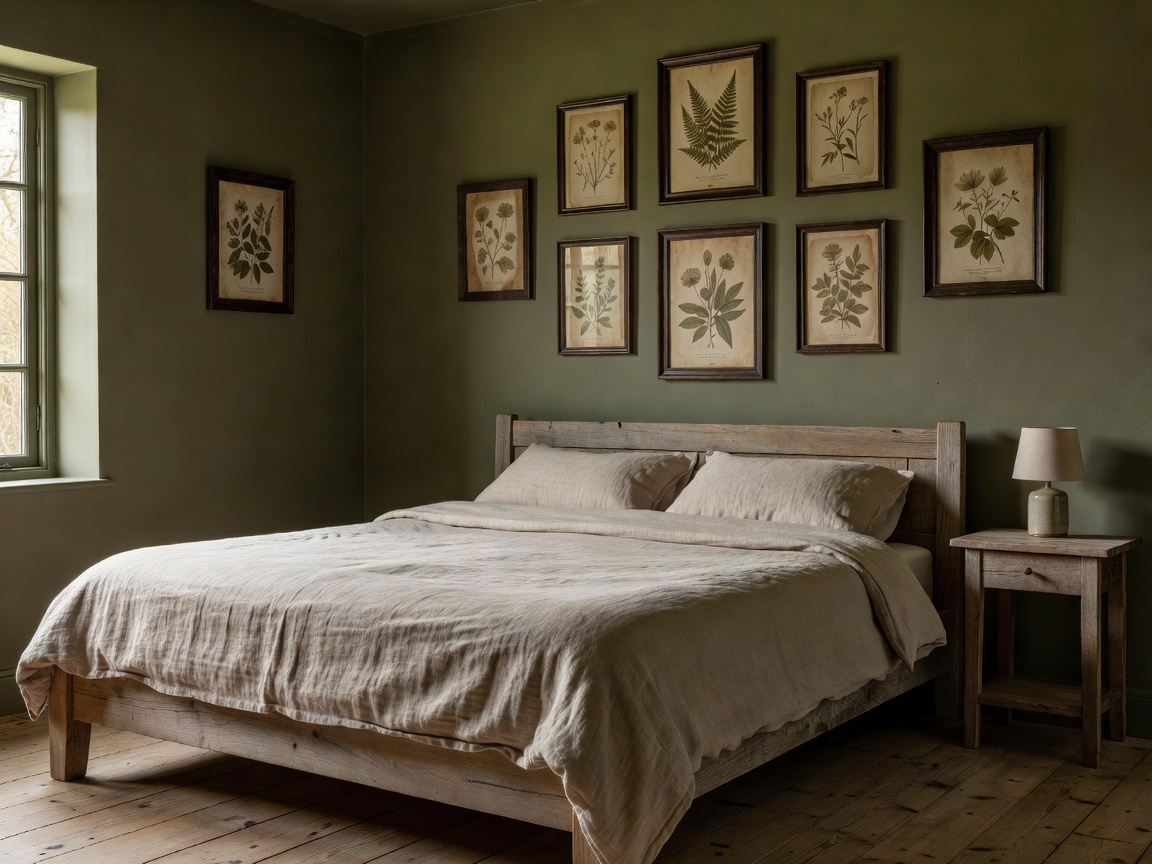
1. The Psychology of the Earth-Grounding Palette
The bedroom should function as a restful sanctuary from the daily visual noise of screens and busy schedules. Botanical palettes rely on low-chroma greens—such as moss, sage, dried bay leaf, and artichoke—combined with earthy undertones of raw umber, warm chalk, and terracotta.
Rather than applying vibrant, saturated greens which can overstimulate the optic nerve, selecting desaturated vegetal shades with yellow or grey undertones creates a soothing, cocoon-like atmosphere that responds gently to seasonal changes in sunlight.
2. Bedding Layering: Thermoregulation with Pure Flax Linen
Quality of sleep is directly linked to skin microclimate regulation throughout the night. Synthetic microfiber sheets trap moisture and create heat spikes, whereas 100% European flax linen offers natural breathability and moisture-wicking properties.
3. Acoustic Softness and Window Drapes
Acoustic tranquility is as essential as visual calm. Hard drywall surfaces reflect sound waves, creating subtle echoes that elevate cognitive fatigue. In cottage bedrooms, drapery serves an acoustic dampening role as well as controlling light.
Pair heavy floor-length linen drapes (lined with blackout thermal cotton interlining) with ceiling-mounted wooden curtain tracks. Extending the curtain rod 250 mm past each side of the window frame ensures the drapes can stack clear of the glass during daytime, maximizing window exposure and garden views.
Wall Art Curation: Archival Flora & Pressed Botanicals
Avoid mass-produced prints. Instead, frame archival herbarium sheets, pressed ferns, or hand-rendered botanical lithographs in narrow solid oak or walnut frames with generous non-reflective museum matting.
4. Nightstand Scale & Clutter-Free Organization
Keep bedside surfaces uncluttered to encourage mental stillness before sleep. Choose solid timber nightstands equipped with a smooth-gliding drawer to conceal books, reading glasses, and charging cables.
Free up table space by installing wall-mounted swing-arm reading sconces 750 mm above the mattress level. Equip these fixtures with 2200K–2700K warm incandescent or filament LED bulbs that emit minimal blue spectrum light in the evening hours.
5. Furniture Joinery: Preserving Timber Grain
Balance soft upholstered textiles with exposed wood pieces. An in-frame chest of drawers in natural oiled oak, a woven cane-back headboard, or a small antique pine blanket chest at the foot of the bed adds texture and age to the room.