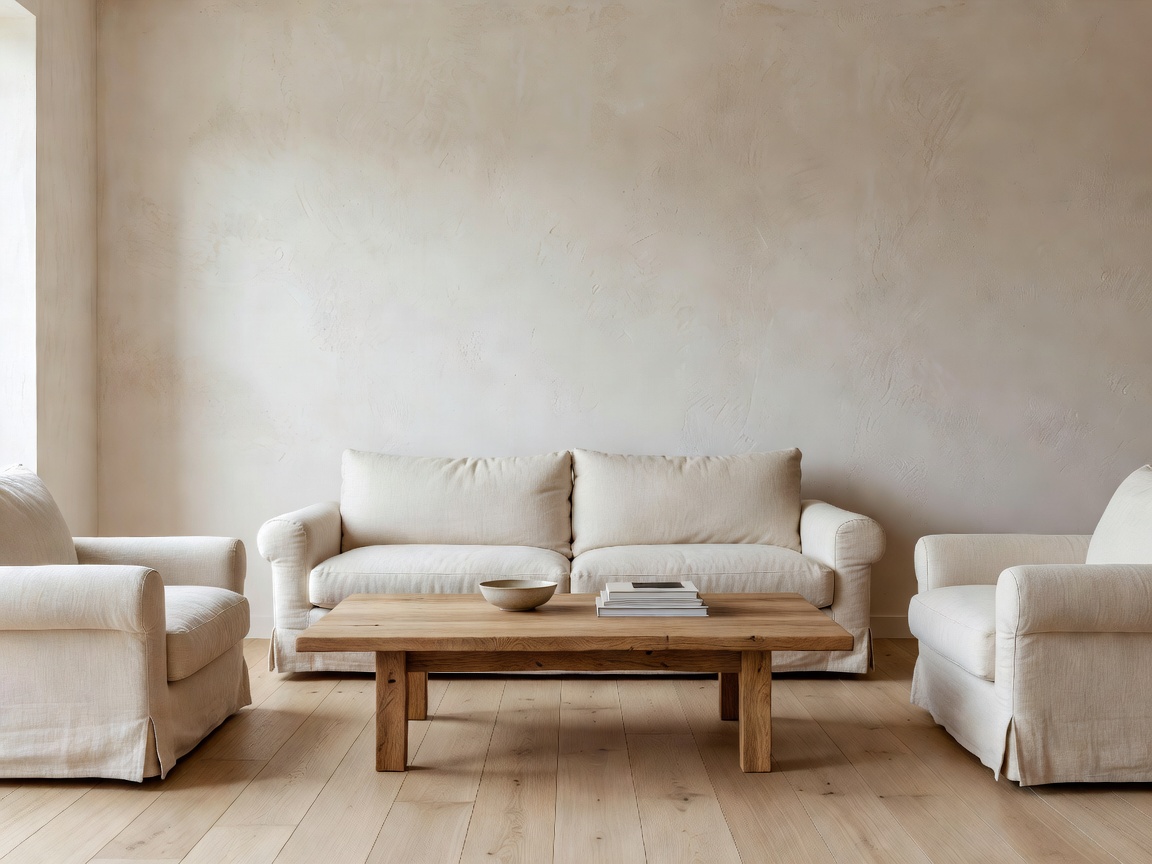
1. The Theory of Warm Minimalism in Cottage Interiors
Warm minimalism is the deliberate distillation of a room down to its most meaningful components, without sacrificing comfort or tactile richness. In historic or country settings, standard modern minimalism can feel detached from the building’s architectural narrative. By introducing natural materials that bear organic grain, imperfect textures, and subtle earthy hues, the space feels uncluttered yet deeply inviting.
Rather than relying on ornamentation or decorative clutter, warm minimalism relies on the inherent character of the surfaces: the gentle mottling of lime plaster, the saw marks on a reclaimed oak mantel, and the variable weave of unbleached linen.
2. Wall Finishes: Limewash vs. Conventional Matte Emulsion
Flat paint finishes can look sterile under shifting natural daylight. Limewash and breathable mineral plaster formulations allow the walls to interact dynamically with morning and late afternoon light.
3. The Furniture Silhouette: Low Profiles and Soft Contours
To preserve openness in cottages with low timber-beamed ceilings, prioritize furniture with a lower center of gravity. Low-profile seating (seat height between 400 mm and 430 mm) expands the vertical distance between the sofa cushion and the ceiling joists, making the room feel noticeably loftier.
Incorporate varied silhouettes to balance straight architectural lines:
- Curved or Rounded Armchairs: Soften the geometric corners of masonry chimneys and structural alcoves.
- Solid Timber Coffee Tables: Sourced from sustainable white oak, walnut, or elm with soft, rounded bullnose edges.
- Low Built-in Bench Joinery: Extending along a single wall to provide hidden storage for electronics, audio components, and throws.
Textile Selection Rule: The 3-Weave Balance
Avoid visual monotony by layering at least three distinct fabric textures in similar tonal values (e.g., ecru, sand, taupe): heavy Belgian linen upholstery, a chunky looped wool or jute area rug, and brushed boucle or raw silk accent cushions.
4. Fireplace & Hearth Focal Treatment
In traditional cottage living rooms, the hearth commands immediate visual focus. A warm minimalist approach strips away ornate wooden surrounds in favor of clean stone reveals, monolithic limestone hearth slabs, or flush lime-plastered chimney breasts.
Pairing a clean-lined wood-burning stove (rated for high efficiency and clean burn standards) with neatly stacked split birch logs within an integrated wall niche creates functional ornamentation that requires no decorative excess.
5. Curating Light: The 3-Point Lighting Approach
Avoid relying solely on central ceiling downlights, which cast harsh downward shadows. Instead, establish three distinct light sources across different elevations:
- Low-Level Accent: Ceramic table lamps with textured linen shades placed on low sideboards (approx. 700 mm from the floor).
- Mid-Level Task: Adjustable brass or blackened steel reading sconces flanking the primary sofa.
- Indirect Ambient: Concealed warm LED strips (2700K color temperature, CRI > 90) casting soft uplight behind ceiling beams or curtain pelmets.